The XoT Management System (XMS)
Overview
The XoT Management System, or XMS, serves as the central command and control hub for the entire XoT infrastructure. It is the primary tool used by administrators to configure, manage, monitor, and secure the XoT environment.
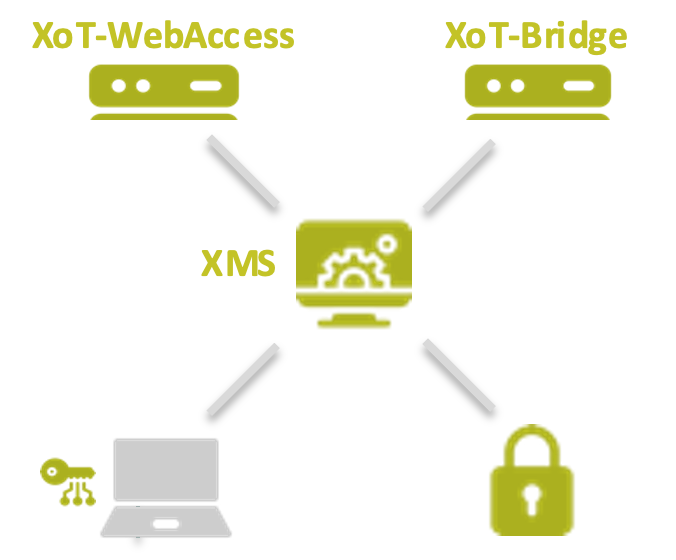
The XMS orchestrates communication and configuration across all connected XoT components (like XoT-Locks and XoT-Bridges). It acts as an MQTT broker, a lightweight messaging protocol, allowing it to efficiently send configuration updates and policy changes out to devices, while also receiving status updates and telemetry data back from them.
Key responsibilities of the XMS include:
- Enrollment and XoT Management: Registering new XoT components (Locks, Bridges) into the system.
- Device Registration: Defining the specific assets or networks that XoT-Locks protect.
- Access Control Policy Configuration: Creating and managing the rules that determine who can access what resources, when, and how.
- System Health Monitoring: Providing visibility into the status and performance of the XoT components.
- Security Management: Handling the deployment and management of digital certificates (PKI) required for secure communication.
- Firmware Updates: Managing the deployment of firmware updates to Xertified hardware components.
Access Policies
A core feature managed by the XMS is the policy system. Policies are the foundation of access control within the XoT environment. Instead of complex network configurations, administrators define access using straightforward criteria:
- Who: Which users, user groups, or even other protected devices need access?
- What: Which protected assets (devices, subnets) should they be able to reach?
- Where: Which XoT-Locks (identified by type, group, location) protect the target assets?
- How: What specific protocols or services (e.g. SSH, HTTPS) are permitted?
- When: Should access be always available or restricted to specific times or schedules?
The XMS translates these high-level policy definitions into the configurations that are automatically pushed out to the relevant XoT components, ensuring that access is granted securely and according to the defined rules. Administrators interact with the XMS primarily through its web-based interface to perform these configuration and monitoring tasks.
In summary, the XMS is the essential administrative brain of the XoT solution, providing centralized management, robust policy control, and system-wide monitoring capabilities.